

Archival Futures
Wednesday, October 28, 2026 | 4:00 pm-6:00 pm
Renaissance Asheville Downtown Hotel, Grand Ballroom B
Join us in this interactive professional development workshop on teaching with folk sources as primary sources. Through guided discussion and hands-on activities, attendees will engage with curated primary source sets that illuminate community persistence amid social, political, and cultural change. The workshop will also offer practical frameworks for building similar resources within participants’ own institutional and community contexts.
Learn with speakers and content from Local Learning, Vermont Folklife, the Oklahoma Oral History Research Program, and the Library of Congress. And announcing Special Guest, NH-based cartoonist, musician, and educator Marek Bennett who leads discovery-based Comics Workshops for all ages throughout New England and the world beyond!
Register below!
As communities navigate ongoing transformations—whether through migration, displacement, environmental change, or social struggle—the preservation and interpretation of local knowledge becomes critical.
This workshop positions archives not as static repositories, but as living sites of engagement that reflect both continuity and change.
Register today to hold your spot. Registration is required if you are not already registered to attend the American Folklore Society meeting. If you have an AFS badge, you may register if you want to receive a certificate of attendance. (If you want to register for the AFS meeting to be able to attend ALL the special sessions and events, please visit the AFS Meeting page.) Registration closes October 24, 2026, after which time all local attendees must register onsite for the full AFS conference fees.
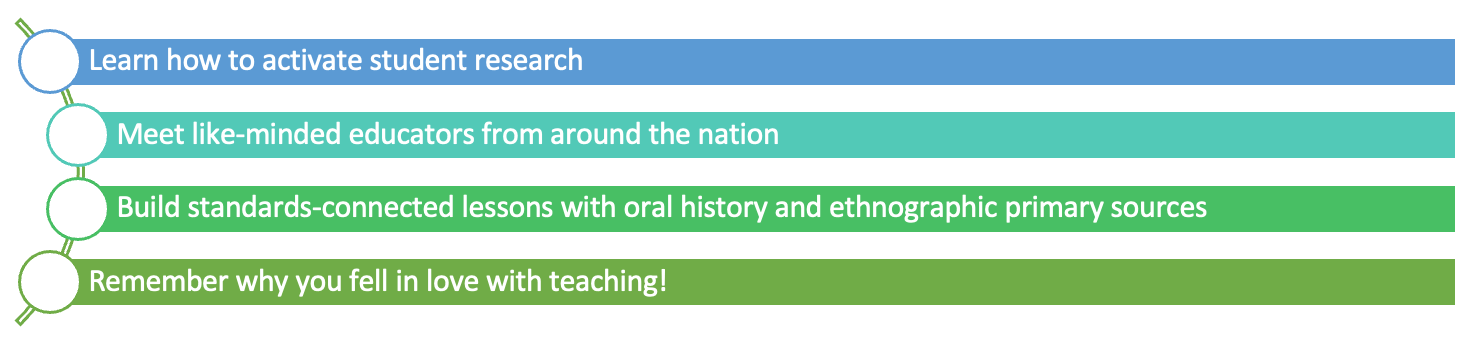
Facilitators will share methodologies developed by the Local Learning team that prioritize collaboration with regional archives and community stakeholders. By placing local collections in conversation with national resources from the Library of Congress, we demonstrate how educators can create dynamic, accessible primary source sets that foreground community voices often excluded from dominant narratives.
Participants will:
- Examine case studies of primary source sets developed through Local Learning initiatives
- Engage directly with digitized and physical archival materials
- Learn strategies for ethical curation, contextualization, and classroom integration
- Collaboratively begin designing their own primary source sets grounded in local or regional materials
- Listen closely to the sounds and music around them and explore their importance and meaning to cultural identity and place-making


About the Workshop:
Teaching with Primary Sources (TPS) is the Library of Congress’ premier educational program, focused on helping educators enhance students’ critical thinking, analysis skills, and content knowledge using primary sources. The Local Learning project team offers teaching tools and materials that engage the digitally available archival holdings of the American Folklife Center of the Library of Congress alongside local and regional collections, bringing them into conversation with each other to create a fuller, more complex narrative of American communities, history, and people. The American Folklore Society co-directs the project with Local Learning.
This special Local Learning workshop acknowledges the powerful opportunities for learning that archives hold–particularly for communities navigating transformation stemming from a variety of disasters, including natural, cultural, and social disruptions. Over the past five years, Local Learning has worked collaboratively with partners across the nation to use American Folklife Center (AFC) collections of the Library of Congress to engage, inspire, and inform learners of all ages through their significant Teaching with Primary Sources education program. This workshop offers an intimate and intentional space to work closely with the core partners of this nationally recognized project.
Through guided discussion and hands-on activities, attendees will engage with curated primary source sets that illuminate community persistence amid social, political, and cultural change. The workshop will also offer practical frameworks for building similar resources within participants’ own institutional and community contexts.
This interactive workshop highlights the work of Local Learning in partnership with the Teaching with Primary Sources (TPS) grant program, funded through the Library of Congress. Participants will explore how educators, archivists, and community partners collaboratively develop primary source sets that center regional histories, local knowledge systems, and underrepresented voices. This session demonstrates how place-based pedagogy can serve as a tool for both historical reckoning and future imagining.
Workshop Faculty and Facilitators:
Local Learning is a National Arts Service Organization that will bring their national faculty and local experts together to support this training opportunity.
Dr. Lisa Rathje is Executive Director of Local Learning. She directs teacher and artist training institutes and advocates for the inclusion of culture in diverse learning spaces. She consults nationally, including currently a 5-year consultancy for the REACH program of the University of South Florida funded by the U.S. Department of Education to strengthen arts and culture programming in the nation’s educational system. With Paddy Bowman, she is co-editor and founder of the Journal of Folklore and Education, an international, freely accessed, multimedia juried journal.
Library of Congress, American Folklife Center documents and shares the many expressions of human experience to inspire, revitalize, and perpetuate living cultural traditions. Designated by the U.S. Congress as the national center for folklife documentation and research, the Center meets its mission by stewarding archival collections, creating public programs, and exchanging knowledge and expertise.
Dr. Guha Shankar is Folklife Specialist in the American Folklife Center, Library of Congress, and a Fellow of the American Folklore Society. He is the Library’s liaison to Local Learning’s TPS consortium in which role he conducts research to locate and provide access to AFC and Library collections for curriculum development by consortium partners. He is the current co-Chair of OHA’s Task Force on Ethics and the Law, serves as project coordinator of Ancestral Voices – a collaborative curatorial initiative with indigenous communities, and co-directs the national Civil Rights History Project (in collaboration with NMAAHC) at the Library. Dr. Shankar also provides skills-based training in field research methods and archival preservation, including project planning, interviewing, photography, and archival best practices. He has extensive experience in media production, publishes in a range of traditional and digital media outlets, delivers public lectures and conducts technical workshops for a variety of audiences.
Oklahoma Oral History Research Program is a research division of the Oklahoma State University Library with the focus of broadening archival inclusion of individual or communal memory and experiences representing Oklahoma and OSU history and culture through ethical oral history practice.
Dr. Autumn Brown earned her Ph.D. in Social Foundations of Education from Oklahoma State University where she is an Assistant Professor in the Edmon Low Library with the Oklahoma Oral History Research Program. Her dissertation was an educational biography of teacher activist Clara Luper (1923-2011) and Luper’s work with Oklahoma City’s NAACP Youth Council leading one of our nation’s first sit-in movements.
Vermont Folklife is a nationally-known education and cultural research nonprofit that uses ethnography—the study of cultural experience through interviewing, participation and observation—to strengthen the understanding of the cultural and social fabric of Vermont’s diverse communities.
Dr. Andy Kolovos is Associate Director and Archivist. He earned a BA in Literature from Bennington College, and holds a Ph.D. in Folklore and Ethnomusicology and an MLS, both from Indiana University. His professional interests include graphic ethnography/ethnographic cartooning, audio field recording, audio preservation, and theory and practice in folklore and folklife archives. He is co-coordinator of the National Folklore Archives Initiative project of the American Folklore Society.
…and with Special Guest!
NH-based cartoonist, musician, and educator Marek Bennett leads discovery-based Comics Workshops for all ages throughout New England and the world beyond! His comics work includes the graphic novel series, The Civil War Diary of Freeman Colby, as well as drawing, translating, & editing for The Most Costly Journey (2021) with the bilingual El Viaje Project. In September 2022, both books were featured at the National Book Festival in Washington DC.
Content created and featured in partnership with the TPS program does not indicate an endorsement by the Library of Congress.
* Local Learning does not offer continuing education credits in North Carolina. What might be of benefit to you is having a certificate of attendance, which Local Learning is willing to provide after your attendance is verified and if you indicate that you will be requesting this certificate in their registration. The responsibility for determining credit eligibility is with the teacher.